
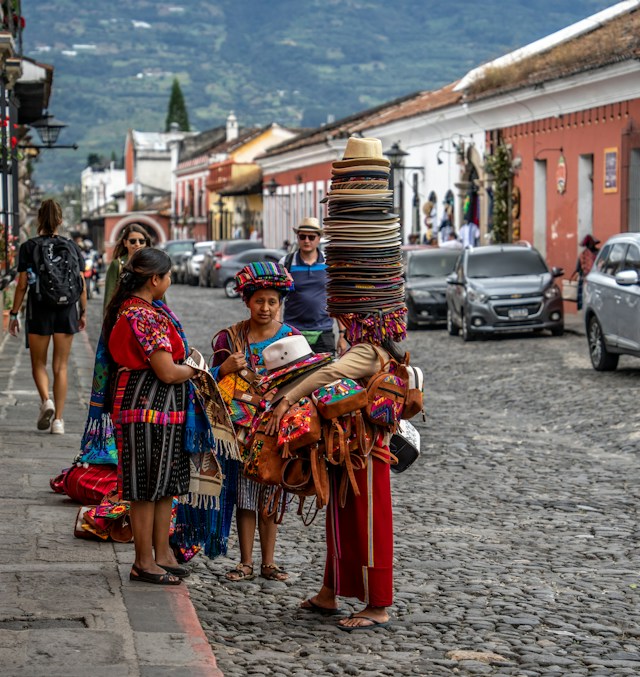
Guatemala Capital 101: Meet the City Most Travelers Skip
Quick answer first. The Guatemala capital is Guatemala City. Locals call it Guate, or just “la capital,” and its full formal name is a mouthful: Nueva Guatemala de la Asunción.
That’s the trivia-night answer. But there’s more to it than a name on a map.
Most Americans land at the airport, grab a shuttle, and head straight for Antigua or Lake Atitlán. I get it. Those places are gorgeous. But the capital is where the country’s money, politics, museums, and best restaurants all live, and it sits in a mountain valley with volcanoes on the horizon. Skipping it feels a bit like flying into New York and only seeing the Hudson Valley.
So here’s what the city is, how it ended up in charge, and whether it deserves a day or two of your trip.
Where is the Guatemala capital, exactly?
Guatemala City sits in the south-central highlands, in a valley called the Valle de la Ermita. The elevation is roughly 4,900 feet. That’s close to Denver territory, and it explains the weather.
You’d expect a Central American capital to be sticky and hot. It isn’t. Daytime highs hang out in the 70s most of the year, and nights can get cool enough for a light jacket. Guatemala’s nickname is the Land of Eternal Spring, and the capital earns it.
The metro area holds around three million people, which makes it the biggest urban area in Central America. The city proper is closer to one million. Either way, it’s big, it’s busy, and yes, the traffic is rough.
| Quick fact | Details |
|---|---|
| Official name | Nueva Guatemala de la Asunción |
| Founded | 1776 |
| Elevation | About 4,900 feet |
| Metro population | Around 3 million |
| Language | Spanish (Mayan languages are also spoken) |
| Currency | Quetzal (GTQ) |
| Time zone | Same as US Central Standard Time, no daylight saving |
| Main airport | La Aurora International (GUA) |
How the Guatemala capital ended up here (it took four tries)
Here’s the thing: Guatemala City wasn’t the first pick. It wasn’t the second or third, either.
The Spanish set up their first capital in 1524 at Iximché, a Kaqchikel Maya city. That fell apart fast once the Kaqchikel rebelled. So the Spanish moved to a spot now known as Ciudad Vieja, at the foot of Volcán de Agua. In 1541, a huge mudflow came down the volcano and buried the town.
Third try was the city we now call Antigua. It lasted more than two centuries and grew into one of the grandest cities in the Spanish colonies. Then a string of earthquakes in 1773 wrecked it.
The Crown had seen enough. Officials ordered the capital moved about 25 miles east to a valley they hoped was safer, and the new city was founded in 1776. Same year as the Declaration of Independence, which makes it easy to remember.
| Capital | Years | What went wrong |
|---|---|---|
| Iximché | 1524-1527 | Kaqchikel uprising |
| Ciudad Vieja | 1527-1541 | Mudflow from Volcán de Agua |
| Antigua Guatemala | 1543-1773 | Earthquakes |
| Guatemala City | 1776-today | Still standing |
Was the new valley safer? Sort of. Earthquakes hit hard in 1917 and 1918, and again in 1976, when a magnitude 7.5 quake killed around 23,000 people across the country. That’s why you won’t see much colonial architecture in the capital. A lot of it has been rebuilt, more than once.
And that old ruined capital? People never fully left. “Antigua” just means “old,” as in the old Guatemala. It’s now a UNESCO World Heritage site and the country’s biggest tourist draw. Funny how that worked out.
Okay, but is it worth visiting?
I’ll be straight with you. Guatemala City isn’t pretty the way Antigua is pretty. It’s loud, spread out, and parts of it are sketchy.
But it’s also the most interesting city in the country if you like food, museums, and seeing how people there live day to day. One or two days is plenty for most travelers.
The zones: a city laid out like a snail shell
The capital is split into numbered zones, or zonas. They spiral outward from the historic center, kind of like a snail shell. The numbers run up to 25, though a few were never used. Every address includes its zone, so you’ll hear people say “Zona 10” the way New Yorkers say “the Upper West Side.”
You only need to know a handful:
- Zona 1: the historic center, with the main plaza, the cathedral, and the National Palace.
- Zona 4: home to Cuatro Grados Norte, a walkable pocket of coffee shops, murals, and small restaurants.
- Zona 10: the Zona Viva, where the hotels, nightlife, and several top museums are.
- Zona 13: the airport, the zoo, and the big national museums.
- Zona 16: Paseo Cayalá, a polished, white-walled shopping and dining district that feels like a movie set.
What to see when you’ve got a day or two
Start in Zona 1 at the Plaza de la Constitución. The green-tinted Palacio Nacional de la Cultura sits on one side and the Metropolitan Cathedral on another. From there you can stroll down Sexta Avenida, a pedestrian street full of old theaters, street food, and people-watching.
Then head underground. Really. The Mercado Central sits below street level behind the cathedral, and it’s packed with textiles, leather goods, and lunch counters.
A few more spots worth your time:
- Museo Popol Vuh, for Maya ceramics and stone carvings.
- Museo Ixchel, all about traditional Maya weaving and dress.
- The Museo Nacional de Arqueología y Etnología, with major pieces from sites like Tikal.
- Mapa en Relieve, a giant outdoor relief map of the whole country, built in 1905.
- Kaminaljuyú, the remains of an ancient Maya city right inside the modern one.
That last one gets me every time. People have lived in this valley for a few thousand years. The “new” capital sits on top of a very old one.
A quick word about the food
You know what? The food alone could justify a stopover. Guatemalan cooking doesn’t get the press that Mexican food does, and that’s a shame.
Try pepián, a thick, toasty stew made with roasted seeds and chiles. Try kak’ik, a red turkey soup from the Cobán region. Grab rellenitos for dessert; they’re fried plantain filled with sweet black beans, and they taste better than that sounds.
And if you see a Pollo Campero, go in. The fried chicken chain started in Guatemala in 1971, and you may have spotted one in the States. People used to carry boxes of it onto flights home. That’s devotion.
The coffee is excellent, too. Much of what’s grown around Antigua and Huehuetenango ends up in American cafes, so drinking it at the source feels right.
Getting there and getting around
La Aurora International Airport sits right inside the city, in Zona 13. Nonstop flights run from several US hubs, and the trip is short: about two and a half hours from Miami and around three from Houston. It’s closer than a lot of people think.
Once you’re on the ground, most visitors use Uber or hotel-arranged taxis. The Transmetro, a bus system with its own lanes, covers the main corridors and is cheap. The old red city buses are a different story, and most travel advice says to skip them.
But there’s a catch with any ride: traffic. Rush hour here can turn a three-mile trip into forty-five minutes. Plan around it.
Is Guatemala City safe?
Fair question, and it deserves an honest answer. The capital has real crime problems, and some zones are best avoided, especially at night. The areas visitors tend to stick to (Zona 10, Zona 4, Cayalá, and the center during the day) are generally fine with normal big-city caution.
So use common sense. Check the current US State Department travel advisory before you book, because the guidance changes.
A few practical habits go a long way:
- Use ride-hailing apps or hotel taxis instead of flagging cars on the street.
- Keep your phone in your pocket when you’re walking, not in your hand.
- Carry small bills in quetzales and leave the flashy jewelry at home.
- Stick to bottled or filtered water.
- Ask your hotel which blocks to avoid; they’ll know better than any blog.
When should you go?
There are two seasons. The dry season runs from about November through April, with clear skies and great volcano views. The rainy season runs from May through October, and it usually means sunny mornings followed by heavy afternoon downpours.
If you’re reading this in the fall, the timing is good. The rains are winding down, and November 1 is right around the corner. On All Saints’ Day, families eat fiambre, a cold salad that can have dozens of ingredients, and the nearby towns of Sumpango and Santiago Sacatepéquez fly giant handmade kites over their cemeteries. Both towns are an easy day trip from the capital.
Holy Week in spring is the other big one, though Antigua steals most of that show.
Frequently Asked Questions
What is the capital of Guatemala?
Guatemala City. Its official name is Nueva Guatemala de la Asunción, and locals often just call it Guate.
Is Antigua the capital of Guatemala?
Not anymore. Antigua was the colonial capital until earthquakes in 1773 forced the move to today’s Guatemala City.
How many people live in Guatemala City?
About one million in the city proper and around three million in the metro area, the largest in Central America.
What language do people speak there?
Spanish is the main language. You’ll also hear Mayan languages such as K’iche’ and Kaqchikel, and English is common in hotels.
What currency is used in Guatemala City?
The quetzal, named after the national bird. Cards work in malls and hotels, but markets and small shops want cash.
Do US citizens need a visa to visit?
For short tourist stays, US citizens generally don’t need a visa, just a valid passport. Check the State Department site for current entry rules.
How far is Guatemala City from Antigua?
About 25 miles. The drive takes an hour or so, though traffic can easily stretch that.
So, is the capital worth your time?
The Guatemala capital isn’t trying to charm you, and maybe that’s the appeal. It’s a working city that took four tries to settle down, got knocked flat by earthquakes, and kept rebuilding anyway.
Give it a day. Walk the plaza, eat the pepián, look at Maya carvings that are older than most countries. Then catch your shuttle to Antigua.
You’ll understand the rest of Guatemala a little better for it. And that’s worth one extra night.
Leave a Reply