
Laotian people: history, identity, and cultural traditions
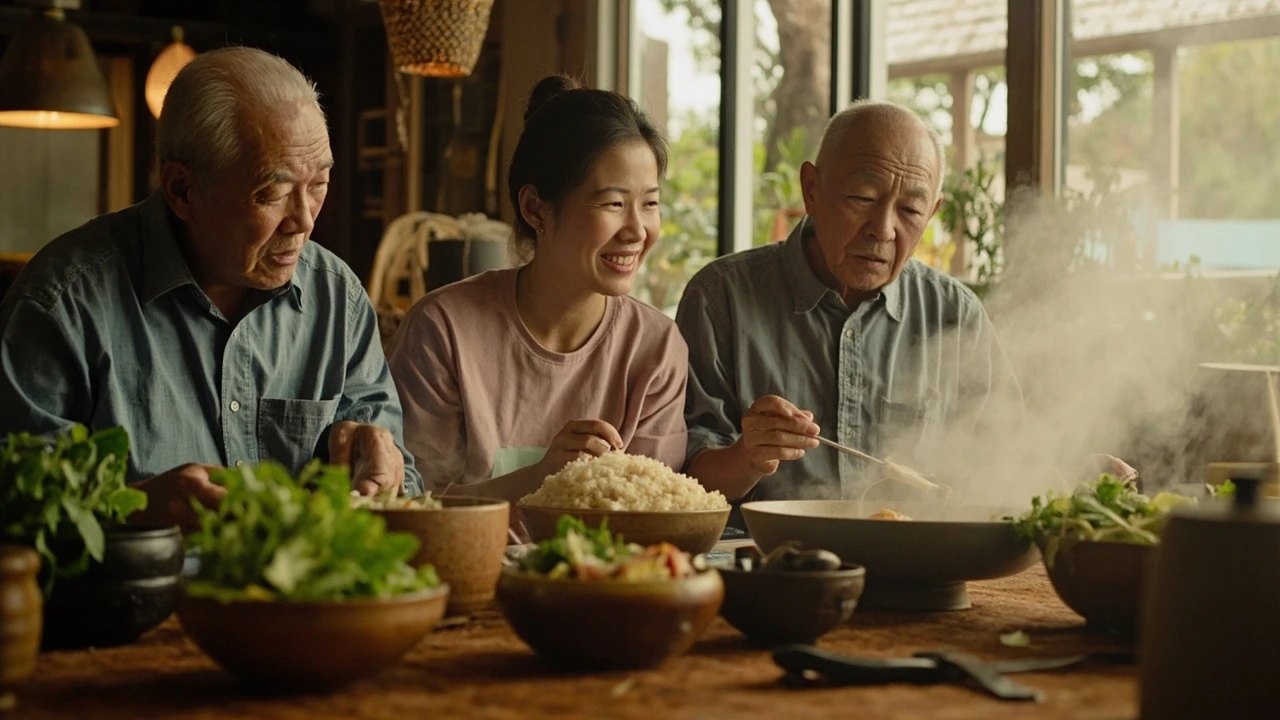
A visitor who sits down for a meal with a Lao American family may notice several differences in language, gesture, food, or family interaction. These details can feel unfamiliar, but they are best understood as part of a living culture shaped by Laos, migration, family memory, and life in the United States. Learning about laotian people is not simply a matter of collecting dishes and festivals. It means recognizing the people behind those traditions and approaching their communities with curiosity, respect, and awareness of individual differences.
The term Laotian usually refers to people with ancestry from Laos, while Lao is the name used in the Lao language and is also widely used by many people of Lao heritage. In the United States, both Lao American and Laotian American appear in community names and personal identities. The labels overlap, but not every person uses them in the same way. Some emphasize their national heritage, others their American identity, and still others focus on a particular region, family history, or ethnic tradition. Respecting the preferred label of the individual is more useful than assuming one term fits everyone.
Laotian people also form part of the wider Asian American experience, but that umbrella does not erase the distinct history of Laos. The country is located in mainland Southeast Asia, bordered by China, Vietnam, Cambodia, Thailand, and Myanmar. Its geography includes the Mekong River basin, mountains, and trade routes that have shaped language, food, religion, and migration. Understanding Lao culture through a specific individual or community is more meaningful than treating a diverse country as if it has one uniform culture.
| Term | Common meaning | What a visitor should remember |
|---|---|---|
| Lao | The endonym used by many people from Laos | It is appropriate in English, especially when referring to the language, food, or traditions of Laos. |
| Laotian | An English-language term for someone from or with ancestry from Laos | Many people use it comfortably, while others prefer Lao or a family-specific identity. |
| Lao American | An American identity connected to Lao heritage | The expression may describe a person’s national, cultural, or family background. |
| Laotian American | Another common American identity | It is often used in community names and by individuals, but it is not the only preferred form. |
| Lao | Also a common term for the Lao language | The language is part of the Tai-Kai language family and is closely related to neighboring languages. |
No single trip can give a visitor complete access to Lao culture. A weekend festival, a restaurant meal, or a conversation with one family may reveal only a small part of the experience. The most reliable approach is to listen to how individuals describe themselves, follow their cues, and avoid turning a complex community into a set of fixed expectations.
How migration shaped Lao American communities
Many of the earliest large-scale Laotian migrations to the United States followed conflict and political upheaval in Laos during the late 1970s and 1980s. Families often separated, crossed borders under dangerous conditions, and later resettled in American cities. Their stories shaped the institutions, foods, festivals, religious centers, and family networks found in Lao American communities today.
The migration and community history is summarized in this migration and community overview, which provides useful background for this point. It describes how many refugees arrived during the late 1970s and 1980s, how communities expanded, and why states such as California, Texas, Minnesota, and Washington became important centers of Lao American life. The source also notes that American census categories have not always separated ethnic Lao people from other groups originating in Laos, which is one reason population figures and community descriptions may vary.
This history explains why food, language, and celebrations may carry particular emotional weight. A traditional dish can connect someone to a village, a temple, an aunt’s kitchen, or a remembered journey. A song may carry a family’s language even when younger relatives understand only part of it. A temple visit may involve practical volunteering as well as religious observance. These connections are personal, and a visitor should avoid assuming that every family has the same memories or practices.
Migration is also an ongoing story rather than a single event in the distant past. Some people in the United States arrived as refugees, others through family reunification, and others through education, work, or later stages of life. Their experiences may differ in country, generation, class, religion, and reasons for leaving. Broad historical facts are useful, but they should not flatten individual lives into a single refugee narrative.
When discussing this heritage, it is useful to distinguish between the Lao population of Laos and the broader population of people with ties to Laos. The United States also has Hmong American and other communities connected to Laos. Their languages, histories, foods, and experiences differ in important ways. Combining everyone under one label can obscure those distinctions and may feel dismissive to people who identify primarily with another group.
- Ask before grouping: A visitor may use “Laotian community” as a convenient phrase, but individuals may prefer more precise identities.
- Use specific history: Name the period, region, or community rather than presenting the entire experience as timeless or unchanging.
- Avoid assumptions about language: A person may speak Lao, English, another language, or a combination of them.
- Distinguish communities: Do not treat Lao, Hmong, and other peoples from Laos as interchangeable.
Language, names, and everyday communication
Lao is spoken in Laos and by diaspora communities around the world. Unlike many familiar European languages, Lao is a tonal language: the meaning of a syllable can change with the pitch used to pronounce it. Beginners are often warned to keep their voices relatively level, but individual learners respond differently, and a natural speaking rhythm should not be confused with a single prescribed rule.
For most visitors, learning a complete Lao vocabulary is unnecessary. A small set of respectful phrases can still improve a first interaction. The value lies in showing effort and accepting that pronunciation may not be perfect. Before offering a phrase, it is best to ask whether speaking Lao would be appreciated. Some people may prefer English, while others may enjoy teaching a visitor how to greet them.
| Situation | Helpful approach | What to avoid |
|---|---|---|
| Meeting someone for the first time | Use a greeting, introduce yourself, and ask how the person prefers to be addressed. | Assuming an English surname reveals a person’s ethnic identity. |
| Using Lao names | Ask how names are pronounced and whether a shortened or anglicized form is normally used. | Changing spelling, nickname, or order without permission. |
| Joining a meal | Wait for the host’s cue and follow the host’s example if you are unsure. | Rushing to serve yourself or leaving before the shared meal is finished. |
| Entering a home or temple | Remove shoes when indicated and ask where to sit or place belongings. | Assuming every building follows identical rules. |
| Taking a photograph | Ask permission, especially with family groups, ceremonies, or people in religious spaces. | Photographing people or rituals without consent. |
English is widely used in many Lao American settings, particularly among later generations, while family homes may rely on a mixture of languages. Code-switching between English and Lao is common and does not necessarily indicate confusion. A speaker may use English for one topic and Lao for a story, joke, food, prayer, or expression of affection. It can also reflect the people present in the room.
Name conventions deserve particular care. Lao names may include a family or family-clan name, a given name, and additional elements that appear in everyday address. Western records may shorten, rearrange, or romanize these names differently. The safest approach is to repeat the name slowly, confirm the spelling, and use the form the individual provides. Surnames also do not always follow the conventions familiar to English-speaking visitors.
For more context about Laos itself, the Laos country profile provides a compact reference for geography, society, and regional context. It is more useful as background than as a substitute for listening to the people being introduced.
Family life, food, and shared tables
Food is one of the most accessible ways to encounter Lao culture, but it is also an area where stereotypes quickly appear. Laotian cuisine varies by region, family, availability, and personal preference. Rice is a central part of many meals, often served alongside a main protein, cooked vegetables, fresh herbs, and a savory or spicy sauce. Laap, a family-style dish of minced meat seasoned with herbs and chilies, is widely associated with the cuisine. Other meals may feature jam, a fresh fish dish, grilled items, or vegetarian preparations.
Dishes such as sticky rice, Som Tam, and tom yum are also encountered in Lao food traditions, although recipes and names can vary widely. A menu at a Lao restaurant in California may look different from a home meal in Savannakhet, while a festival meal may combine several regional styles. Restaurant food should not be treated as a complete map of what every Lao family eats.
At a shared table, the host may organize the meal, serve particular items, and place important dishes where everyone can reach them. Diners may also eat communally from shared plates while using individual bowls for rice and soup. Guests are often expected to wait until the host begins or indicates that the meal is ready. These customs vary, so observation remains more reliable than applying a universal script.
Vegetarian food may be prepared without animal products, but a clear vegetarian request is still useful because fish sauce and other animal-derived ingredients can appear in dishes that otherwise look plant-based. Guests with allergies should ask about preparation methods and cross-contact. Restaurant staff may welcome clear questions, especially when the dish contains many herbs and seasonings.
- Before eating: Wait for the host to invite guests to begin.
- During the meal: Use serving utensils when provided and avoid reaching across the table.
- When complimenting food: A specific comment about a flavor or ingredient is better than declaring one version “authentic.”
- After eating: Do not rush to leave the table if conversation and tea are continuing.
- As a guest: Bring a small gift when appropriate to the occasion, and avoid assuming gifts are expected or mandatory.
Food is also a route into family history. Someone may describe a dish as the food served at New Year, explain a regional herb that is difficult to find in the United States, or prepare a dish differently after learning that a grandparent used another method. Listening to those details is more useful than asking a binary question about whether a meal is “really Lao.”
For travelers, restaurant research should include recent reviews, current menus, and direct confirmation of dietary needs. Prices, hours, and menu items change, so an old travel article cannot guarantee that a particular restaurant is open or serving a specific dish.
Religion, temples, festivals, and community life
Theravada Buddhism is the predominant religion in Laos, and Buddhist practice has influenced Lao art, temple architecture, holidays, and community life. For additional context, Lao American communities have also supported Buddhist temples commonly called vat or wat. These institutions may serve as places of worship, gathering, cultural education, language instruction, weddings, funerals, festivals, and social support. Their role varies by location and congregation.
Christian communities, including Catholic, Protestant, and other denominations, also exist within the Lao population in Laos and the United States. Some families combine Buddhist and Christian traditions or move between them across generations. Describing Laotian people as uniformly Buddhist is therefore too simple and disrespects the diversity of lived belief.
Visitors to a temple should ask what is appropriate before entering, photographing, or joining an activity. Clothing rules may vary, and some spaces or ceremonies may be restricted. Shoes are commonly removed when entering a building where the floor is treated as a clean or sacred space. The correct response to uncertainty is to pause and ask a host or temple representative rather than improvise.
Lao New Year, known in Lao as Pi Mai, is one of the most widely recognized cultural celebrations. It is associated with water, merit-making, family gatherings, performances, and the transition into a new year. Public events in the United States may include temple activities, food stalls, music, dancing, and games. Observance varies by community, and some celebrations place more emphasis on religious ceremonies while others emphasize community entertainment.
Other festivals and observances may focus on the Buddha, ancestors, village life, the beginning of the Buddhist Lent period, or local harvests. A visitor should confirm dates and activities directly with the host community because schedules, observances, and ticketing practices can change from year to year.
| Community setting | What it may include | Best preparation |
|---|---|---|
| Buddhist temple | Worship, teaching, meditation, meals, cultural programs, and family gatherings | Ask about dress, photography, seating, and participation. |
| Lao New Year gathering | Merit-making, water-related customs, performances, food, and family events | Confirm whether clothing, bathing suits, water use, or age limits apply. |
| Community meal | Shared dishes, stories, conversation, and informal cultural exchange | Ask about dietary needs and let the host guide the pace. |
| Language or cultural program | Lao instruction, history, music, crafts, or intergenerational activities | Confirm that registration or advance notice is required. |
Community organizations often rely on volunteers who prepare food, maintain buildings, teach language, support cultural events, or help newer families. Participation can be more meaningful than treating a cultural event as a spectator attraction. Even a small contribution, when appropriate and requested, may show respect for the labor behind the gathering.
Where Lao American communities live and how to visit responsibly
Lao American communities are widely distributed rather than confined to one neighborhood. California contains several major concentrations, including communities in the Sacramento, San Francisco Bay Area, Fresno, Los Angeles, and San Diego regions. Texas, Minnesota, Washington, Colorado, Illinois, and other states also have established populations. Smaller communities can be found throughout the country, including the Northeast, Midwest, Southeast, and Southwest.
A city-level population count does not reveal whether every visitor should expect an active cultural district or a particular attraction. The best approach is to identify a specific institution, restaurant, event, or community organization through current sources. For example, a traveler planning a wider itinerary might compare the neighborhood-level format of the guide to Parts of New York: Boroughs, Regions, and Local Quirks with the first-time orientation offered in Sao Paulo Brazil: A Straight-Talk Guide for First Timers. Both illustrate how understanding distinct areas can prevent an unrealistic expectation that every neighborhood offers the same experience.
When researching a Lao community, prioritize current information from the organization itself. Check the event date, location, parking or transit details, language interpretation, accessibility, food service, and whether children or nonmembers can participate. Contact the organizer when the website does not answer a practical question. Avoid planning a trip around a remembered festival date that has not been reconfirmed.
“Support local businesses” is a useful starting point, but responsible travel requires more thought. A community cultural center may not be a conventional business. A temple may be a place of worship rather than a tourist attraction. A family meal is a personal welcome, not a performance. The visitor’s role should reflect the setting and the host’s priorities.
- Start with the correct community. Verify whether the group is ethnic Lao, Hmong, or another community connected to Laos, and use the organization’s preferred terminology.
- Find a current calendar. Look for an official community, temple, or organizer page rather than relying on a date copied from an older article.
- Ask what participation is welcome. Clarify whether visitors may watch, contribute, learn, eat, or only attend a ticketed performance.
- Plan around local guidance. Confirm travel details directly, especially for small venues with limited public information.
- Share accurate attribution. Credit the specific community or organization rather than presenting generic cultural material as an individual’s tradition.
Visitors should also consider the effect of photography and crowd size. Large tour groups can overwhelm a family event or a sacred space. At the same time, a traveler should not assume that the community wants to be hidden from public view. The best balance is advance communication, modest group size where possible, and willingness to follow the guidance of those hosting the event.
How to avoid stereotypes while learning about Lao culture
Laos is a country of many regions, communities, and traditions, and the Lao diaspora in the United States includes people with sharply different experiences. Language ability, religious practice, food preferences, occupation, political views, and ties to rural or urban communities can vary within a single family. Stereotypes become damaging when they turn one version of Lao identity into a rule for everyone.
| Stereotype to avoid | More accurate approach | Question that encourages specificity |
|---|---|---|
| “All Lao people eat the same food.” | Regional, family, religious, and seasonal influences produce substantial variation. | Which dishes are special in your family? |
| “Everyone speaks Lao.” | Language use changes by generation, home, and social setting. | Which languages do you use at home? |
| “Lao culture is entirely Buddhist.” | Buddhist traditions are influential, but families follow different beliefs or combinations of beliefs. | What traditions help your family remember important occasions? |
| “A temple is a tourist attraction.” | Temples are primarily religious and community institutions, even when they host public events. | What should visitors know before attending? |
| “Everyone wants to discuss the refugee experience.” | Migration is important, but individuals differ in how and when they discuss it. | Would you prefer to talk about your family’s history, or something else? |
Culture is also not static. A second-generation American may be more connected to a particular religious practice than an elder relative, while another relative may have little interest in formal temple events. A younger family member may enjoy traditional music, dance, fashion, language, or food without attending festivals regularly. An elder may teach a recipe without using Lao at home. Neither pattern is more authentically Lao than the other.
The word authentic can create a difficult standard because it suggests that only one version of a culture is genuine. A more productive approach is to ask what is meaningful to the person speaking. For one family, that might be a morning market, a temple holiday, a regional dish, or a language lesson. For another, it could be a family reunion, music, creative work, or a simple meal with relatives.
Humility is particularly useful when learning from a host. Instead of asking whether a practice is “authentic,” ask what it means, who maintains it, and how it has changed. When corrected, adjust without defensiveness. These conversations reveal that culture belongs to living communities rather than to outsiders’ checklists.
- Describe specific people: Replace broad statements about “all Laotians” with what you learned from a particular person or organization.
- Distinguish observation from interpretation: Notice what happened before assigning a motive or meaning to it.
- Ask open questions: “What does this celebration mean to your family?” is more useful than “Why do Laotians celebrate this way?”
- Credit cultural sources: Name the community, artist, organization, or family that shared the information.
- Accept correction: If terminology is wrong, update it and do not defend the original wording.
A practical checklist for meeting and learning from Lao people
A visitor does not need to become an expert before sharing a meal or attending an event. Preparation can focus on curiosity, clarity, and respect for boundaries. Start by learning the name of the host community, the occasion, and what participation involves. If the event includes religious activity, dress and behavior guidance may matter more than knowing a list of Lao dishes.
- Confirm names and labels. Ask how the community or individual refers to itself instead of choosing a label from appearance.
- Check the current event details. Verify the date, venue, hours, admission, transportation, accessibility, and language services.
- Ask about food needs. Explain allergies and dietary restrictions clearly, and request direct confirmation rather than assuming a dish is suitable.
- Learn a little Lao. A greeting and a short phrase of thanks can show respect, but English is acceptable if that is what the host prefers.
- Ask before photographing. This includes children, ceremonies, private homes, food preparation, and people engaged in prayer.
- Follow host cues. When uncertain about seating, serving, giving gifts, or joining a ritual, observe and ask quietly.
- Buy from the community carefully. Support businesses and organizations directly, and avoid treating religious spaces as commercial attractions.
- Carry your own waste. Leave public gathering areas cleaner than you found them.
- Share accurate information afterward. Avoid turning a personal story into a sweeping claim about an entire population.
For longer visits, a reflective journal can help separate what you observed from what you assumed. Note the names of dishes, the context of songs or ceremonies, and the names of organizations only with permission. This habit makes it easier to avoid misremembering details and to recognize the difference between a community-specific practice and a broader tendency.
Travel resources should also be checked for freshness. Restaurant hours, temple event schedules, community contacts, and even local transit arrangements can change. The most dependable information will come from the venue, organizer, municipal source, or community representative responsible for the activity. Avoid assuming that a festival mentioned in a social post will repeat on the same date or follow the same program next year.
Most importantly, do not treat cultural knowledge as a substitute for relationship. Meeting Lao people well means listening to them, noticing where you are welcome, accepting guidance, and leaving room for identities that your travel expectations did not anticipate.
Frequently asked questions
What are laotian people?
Laotian people are people with ancestry from Laos who live in Laos or in diaspora communities around the world. In the United States, the term may refer to ethnic Lao people specifically and can sometimes be used more broadly for people connected to Laos. Because Laos also includes Hmong and other populations, asking individuals and communities how they identify is more accurate than relying on a broad label.
Are Lao and Laotian the same thing?
Both terms refer to a connection with Laos. “Lao” is commonly used for the language, country, and people in a self-referential sense, while “Laotian” is widely used in English. “Lao American” and “Laotian American” are also both common. There is no single rule that applies to every person, so use the form preferred by the individual or organization.
What language do Laotian people speak?
Many speak Lao, English, or both. Language use can vary by generation, household, region, and social setting. Some families also use other languages they have learned through migration and community life. Code-switching between English and Lao is common and can be a normal way of expressing identity or changing the tone of a conversation.
What is traditional Laotian food?
Lao food often centers on rice served with herbs, vegetables, meat, fish, soups, and strongly seasoned dishes such as laap. Sticky rice, tam, and tom yum are also well known. Recipes vary considerably by region and family, so it is better to describe a dish as a specific regional or family preparation than to declare one version the only authentic dish.
What should I know before attending a Lao festival?
Confirm the event with its current organizer, then ask about clothing, photography, entry, seating, food, water-related activities, and age restrictions. If the event takes place at a temple, treat the temple first as a religious and community institution. Do not assume that one year’s program will be repeated unchanged the following year.
Are all Laotian people Buddhist?
No. Theravada Buddhism is the predominant religion in Laos and influences many Lao cultural traditions, including temple life and major observances. There are also Christian and other religious communities, and some individuals combine traditions or identify in ways that do not fit a single category. Ask about a person’s practice rather than making an assumption.
Where do large Lao American communities live in the United States?
California has several major Lao American population centers, including communities in the Fresno, Sacramento, San Francisco Bay Area, Los Angeles, and San Diego regions. Texas, Minnesota, Washington, Colorado, Illinois, and other states also contain established communities. Smaller populations are spread across the country, so current local organizations are often more useful than broad state-level information.
How should I greet someone with Lao heritage?
A simple English greeting is appropriate when that is the language being used. If the other person speaks Lao and invites you to use it, a short greeting can show thoughtfulness. Ask how they pronounce their name and how they prefer to be addressed. Avoid assuming that an English surname, an accent, or a family story predicts someone’s cultural identity.
Can I photograph people at a Lao community event?
Ask first. Photography rules may vary between a private gathering, a public festival, and a religious ceremony. Children, elders, performers, cooks, and people engaged in worship should not be treated as incidental parts of the scene. The event organizer or host can explain which areas are open to photography and where a camera would be inappropriate.
What is the best way to support a Lao American community?
Support can include attending a current event, buying from community businesses, volunteering where help is requested, contributing to a temple or cultural organization, and sharing accurate information. Support should also respect boundaries. Community members are not obliged to perform their culture for visitors, and religious or family events should not be treated as entertainment unless that is their stated purpose.
Leave a Reply