
Ecuador Famous Landmarks That Deserve a Spot on Your List
Ecuador is about the size of Colorado. That’s it. And somehow this little country squeezes in snow-capped volcanoes, Amazon jungle, colonial cities, and islands where sea lions nap on park benches.
So when people ask me about Ecuador famous landmarks, I never know where to start. Do you lead with the Galápagos? The equator line? A volcano you can see from a city of nearly three million people?
Here’s the thing. You don’t have to pick just one. The country is small enough that you can eat breakfast in the Andes and be sweating in the jungle by dinner. I’ve pulled together the places that are worth your vacation days, plus the stuff nobody tells you until you’re already wheezing at 12,000 feet.
One quick note before we get going. Ecuador has used the US dollar since 2000, so there’s no exchange math. Bring small bills, though. Nobody wants to break your fifty.
First, a Quick Cheat Sheet
If you’re the type who skims (no judgment, I do it too), this table gives you the short version.
| Landmark | Region | Approx. Elevation | Why People Go |
|---|---|---|---|
| Quito Old Town | Andes | 9,350 ft | Colonial churches and plazas |
| Mitad del Mundo | Andes | 8,000 ft | Standing on the equator |
| Cotopaxi | Andes | 19,347 ft at the summit | A near-perfect volcanic cone |
| Quilotoa | Andes | 12,800 ft at the rim | A turquoise crater lake |
| Chimborazo | Andes | 20,548 ft at the summit | Ecuador’s tallest peak |
| Cuenca | Southern Andes | 8,400 ft | Blue-domed cathedral, hat weavers |
| Ingapirca | Southern Andes | 10,400 ft | The country’s biggest Inca site |
| Galápagos Islands | Pacific | Sea level | Wildlife that isn’t scared of you |
See all those elevation numbers? Keep them in mind. We’ll come back to that.
Which Ecuador famous landmarks sit closest to Quito?
Most US travelers land in Quito, and that’s lucky, because a good chunk of the big sights are within a couple of hours of the airport. Flights from Miami take about four hours. No jet lag to speak of, either, since Ecuador sits on roughly Eastern or Central time depending on the season.
Quito’s Old Town: gold, gargoyles, and thin air
Quito’s historic center was one of the very first places UNESCO ever put on its World Heritage list, back in 1978. Walk around for an hour and you’ll get why. The streets are steep, the plazas are wide, and there seems to be a church on every other block.
A few stops I’d put at the top:
- La Compañía de Jesús, a Jesuit church whose interior is covered in gold leaf. It looks like the inside of a jewelry box.
- The Basílica del Voto Nacional, where the gargoyles are iguanas, tortoises, and armadillos instead of the usual monsters.
- Plaza de la Independencia, the main square, which is good for people-watching with a coffee.
- El Panecillo, the hill with the winged Virgin statue looking over the city.
But there’s a catch. Quito sits at about 9,350 feet. That’s higher than any ski town base in Colorado you’ve probably stayed in. Take day one slow. Really.
Mitad del Mundo: the equator that’s slightly off
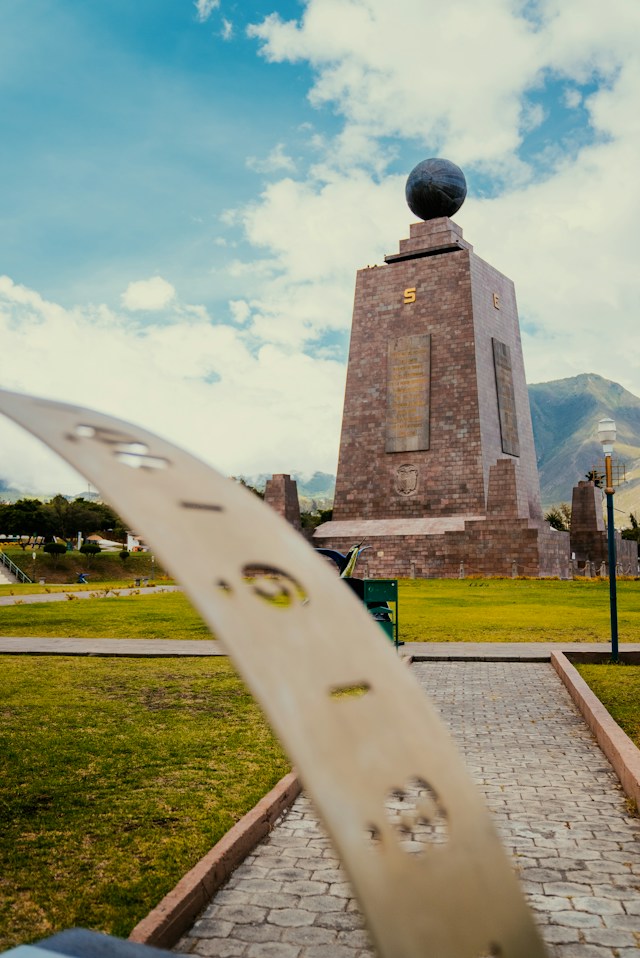
About 16 miles north of the city, there’s a big stone monument with a yellow line painted on the ground. This is Mitad del Mundo, the “Middle of the World.” You straddle the line, one foot in each hemisphere, and someone takes your picture. It’s cheesy. You’ll do it anyway.
Now here’s the funny part. The monument isn’t on the equator. Modern GPS puts the real line roughly 800 feet to the north. The French-led survey team that measured it in the 1700s got remarkably close for people working with brass instruments, but close isn’t exact.
There’s a small museum nearby called Intiñan that claims the true line. They’ll have you balance an egg on a nail and watch water drain in different directions. Is the science airtight? Not really. Is it fun? Yeah, it is.
Cotopaxi: the volcano on every postcard
Head about 30 miles south of Quito and you’ll hit Cotopaxi National Park. The volcano tops out at 19,347 feet, and on a clear morning the cone looks almost too symmetrical to be real, like a kid drew it.
You don’t need to be a mountaineer to enjoy it. Most visitors walk around Limpiopungo Lagoon, watch for wild horses, and hike up to the José Rivas refuge at nearly 16,000 feet. That hike is short and brutal. Your lungs will have opinions.
Cotopaxi is active, and I mean that. It erupted in 2015 and has had restless stretches since. Parts of the park close when it acts up, so check the status before you drive out.
The Andes Keep Going (And So Should You)
Once you leave the Quito area, the highway south runs between two rows of volcanoes. The German explorer Alexander von Humboldt nicknamed it the Avenue of the Volcanoes in the early 1800s, and the name stuck. It’s one of the better road trips in South America, and it strings together several more heavy hitters.
Quilotoa: that lake doesn’t look real
Quilotoa is a collapsed volcano with a lake sitting in the crater. The water shifts between green and turquoise depending on the light, thanks to dissolved minerals. The crater is about two miles across.
You can hike down to the shore in around half an hour. Coming back up takes a lot longer, and plenty of people pay for a mule ride. No shame in that. The rim sits near 12,800 feet, which is a rough place to climb stairs made of sand.
Chimborazo: closer to the stars than Everest
Here’s a good bar trivia fact. Mount Everest is the highest mountain above sea level. But the summit of Chimborazo, at 20,548 feet, is the farthest point from the center of the Earth.
How? The planet bulges at the equator, kind of like a basketball someone is sitting on. Chimborazo is almost on the equator, so it gets a head start. You can drive to a refuge on its slopes and spot vicuñas, the wild cousins of the alpaca, along the way.
Baños: waterfalls and one very famous swing
Baños is a small town tucked under the Tungurahua volcano, where the mountains start dropping toward the Amazon. It’s the adventure hub of the country. Think Moab, but green and wet.
The two big draws are Pailón del Diablo, a thundering waterfall you can walk right up behind, and the “Swing at the End of the World” at Casa del Árbol. You’ve seen that swing on Instagram. It looks like you’re flying off a cliff. In person, it’s a lot less scary, and the line can be long.
Cuenca and Ingapirca: the quieter south
Cuenca is the city people fall for. It’s calmer than Quito, with cobblestone streets, four rivers, and a cathedral topped by sky-blue domes. Its historic center joined the UNESCO list in 1999. A lot of American retirees have settled here, so you’ll hear more English than you’d expect.
And a small tangent, because it bugs me. The Panama hat is from Ecuador. Always has been. The hats got their name because they were shipped through Panama, and the canal workers wore them. Cuenca’s workshops still weave them from toquilla straw, and UNESCO recognized the craft in 2012. So if you buy one, you’re buying an Ecuadorian hat. Tell your friends.
About two hours north of Cuenca sits Ingapirca, the largest Inca site in Ecuador. It’s no Machu Picchu, and I won’t pretend it is. But the Temple of the Sun, with its curved wall of fitted stone, is impressive, and you’ll share it with a few dozen people instead of a few thousand. The site was built on land the Cañari people held long before the Inca showed up, and you can see both cultures in the ruins.
Ecuador famous landmarks on the coast and beyond
So far it’s been all mountains. But Ecuador has a Pacific side too, and that’s where the most famous name on the whole list lives.
The Galápagos: yes, it lives up to the hype
The Galápagos Islands sit about 600 miles off the mainland. Charles Darwin stopped by in 1835, and what he saw there helped shape his theory of evolution. The islands joined the UNESCO list in 1978, the same year as Quito.
What gets people is how close the animals let you get. They never learned to fear humans. You’ll step around marine iguanas on the sidewalk. Here’s a taste of what you might see:
- Giant tortoises that can live past 100 years
- Blue-footed boobies doing their goofy mating dance
- Marine iguanas, the only lizards on Earth that feed in the ocean
- Sea lions that will swim circles around you while you snorkel
- Galápagos penguins, the only penguins found north of the equator
But there’s a catch, and it’s the price. The national park entry fee for most foreign adults went up to $200 in 2024, and there’s a separate transit card fee on top. Add flights from the mainland and either a cruise or island hotels, and this becomes the expensive part of your trip. Confirm the current fees before you go, since they can change.
Guayaquil and the Amazon, briefly
Guayaquil is the country’s biggest city and the usual jumping-off point for Galápagos flights. If you have a layover, walk the Malecón 2000 boardwalk along the river and climb the 444 numbered steps through the colorful Las Peñas neighborhood.
On the other side of the Andes, Yasuní National Park is one of the most biodiverse places on the planet. It’s hard to reach and usually involves a motorized canoe. Not a “landmark” in the monument sense, but worth knowing about.
So When Should You Go?
Ecuador doesn’t have summer and winter the way we do. It has wet and dry, and it changes by region. Here’s a rough guide.
| Region | Drier Months | What to Expect |
|---|---|---|
| Andes (Quito, Cotopaxi, Cuenca) | June to September | Clearer volcano views, cool nights |
| Galápagos | June to November | Cooler water, more active marine life |
| Galápagos (warm season) | December to May | Warmer, calmer seas, some rain |
| Amazon | Rain is possible all year | Hot, humid, muddy trails |
Mountain weather is moody no matter the month. Locals say you can get four seasons in one day in Quito, and they’re not kidding.
A Few Things I Wish Someone Had Told Me
Remember those elevation numbers from earlier? Here’s where they matter. Altitude sickness doesn’t care how fit you are. A marathon runner can feel awful while their couch-loving cousin feels fine.
- Give yourself a day or two in Quito before any big hike.
- Drink more water than you think you need, and go easy on alcohol at first.
- Pack layers. Mornings can be near freezing and afternoons warm.
- Wear sunscreen. The equatorial sun at high altitude burns fast, even through clouds.
- Carry small bills and coins, since change is scarce.
One more thing, and I’d rather be upfront about it. Ecuador’s security situation has been rough in some areas over the past few years, especially parts of the coast. The main tourist routes see plenty of visitors, but read the latest US State Department travel advisory before you book. It breaks things down by province, which is useful.
Questions People Ask Before They Book
What is the most famous landmark in Ecuador?
The Galápagos Islands, by a wide margin. On the mainland, Quito’s Old Town and Cotopaxi are the best known.
Do US citizens need a visa for Ecuador?
For tourist stays of up to 90 days, generally no. You need a valid passport. Check the State Department site for current entry rules.
What currency does Ecuador use?
The US dollar. Ecuador adopted it in 2000, so you can spend the cash already in your wallet.
Is the equator monument on the real equator?
Not quite. GPS puts the true line roughly 800 feet north of the Mitad del Mundo monument.
How many days do I need in Ecuador?
About a week covers Quito and the central Andes. Add five to seven more days if you want the Galápagos.
Is Cotopaxi safe to visit?
Usually, yes, but it’s an active volcano. Park access changes with its activity level, so check before you go.
Can I visit the Galápagos without a cruise?
Yes. You can stay in hotels on inhabited islands like Santa Cruz and San Cristóbal and take day trips by boat.
So, Is It Worth the Flight?
I think so. Few countries pack this much into this little space. You can stand on the equator in the morning, stare up at a glacier-topped volcano by lunch, and be planning your tortoise sightings by the weekend.
It’s not perfect. The altitude is hard on some people, the Galápagos costs real money, and you do need to pay attention to safety news. But if you plan around those things, Ecuador gives back a lot.
Start with Quito. Take it slow that first day. And then see how far south that road full of volcanoes takes you.
Leave a Reply