
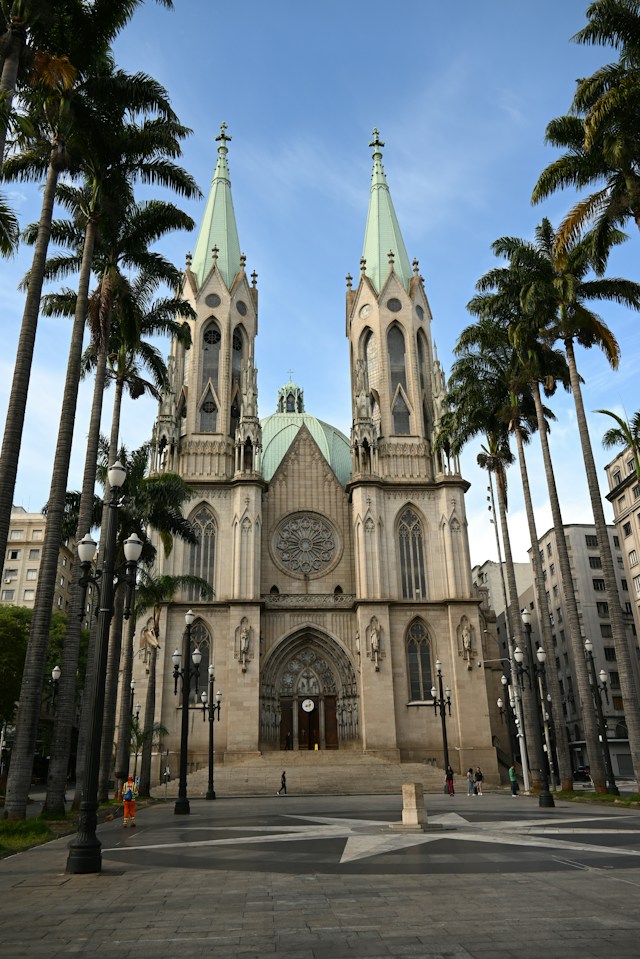
Sao Paulo Brazil: The Giant Most Americans Fly Right Over
Ask ten Americans to name a Brazilian city and nine will say Rio. Fair enough. Rio has the beaches, the statue, the postcard.
But the biggest city in the country, and in the whole Southern Hemisphere, sits about 270 miles to the southwest. Sao Paulo Brazil is home to roughly 12 million people inside the city limits and more than 20 million across the metro area. That’s bigger than the New York metro. And most of us couldn’t point to it on a map.
Here’s the thing: it’s not a pretty city. Not at first glance, anyway. You land, you get in a car, and you see concrete, more concrete, and traffic that makes the 405 in Los Angeles look polite. I’ll come back to that, because the “ugly” label falls apart once you start walking around.
What it does have is food, art, nightlife, and an energy that’s hard to explain until you’re standing in it. Think of it as the Chicago or New York of South America: the place where the work gets done and where people then go out and eat really, really well.
So what’s the deal with this place?
A little background helps. Jesuit priests founded the city on January 25, 1554, on a plateau about 2,600 feet above sea level. For a few centuries it stayed small. Then coffee money showed up in the 1800s, and with it came waves of immigrants from Italy, Japan, Portugal, Lebanon, Syria, Germany, and plenty of other places.
That mix is the whole story. It’s why the pizza is a big deal, why the city has the largest Japanese community outside of Japan, and why you can eat kibbeh at a corner snack bar like it’s no big thing.
People from the city are called paulistanos. People from the wider state are paulistas. Mix them up and nobody will get mad, but they’ll notice.
And the language is Portuguese, not Spanish. Your high school Spanish will help you read a menu, and that’s about where the help ends. English is common in hotels and nicer restaurants, less so in taxis and bakeries. Download an offline translation app before you go. Honestly, it’ll save you more than once.
When should you visit Sao Paulo Brazil?
The seasons are flipped from ours, so their summer is our winter. But the altitude keeps things milder than you’d guess for a city sitting near the Tropic of Capricorn. It rarely gets brutally hot, and it never gets truly cold.
Locals call the city “Terra da Garoa,” the land of drizzle. That tells you something. Summer afternoons often end with a hard downpour that floods a few streets and then just stops, like somebody flipped a switch.
| Season | Months | Typical Temps | What to Expect |
|---|---|---|---|
| Summer | December to February | Highs in the low 80s, lows in the upper 60s | Warm, humid, heavy afternoon storms |
| Fall | March to May | Highs in the mid to upper 70s, lows near 60 | Rain eases off, comfortable days |
| Winter | June to August | Highs in the low 70s, lows in the low 50s | Dry, sunny, chilly at night |
| Spring | September to November | Highs in the upper 70s, lows near 60 | Warming up, some rain returns |
If you want my pick, go between April and September. Less rain, clear skies, and you can walk all day without melting. Pack a light jacket, though. Most Brazilian homes and plenty of budget hotels don’t have heat, and a 52-degree night feels colder indoors than you’d think.
One more timing note. The Formula 1 race at Interlagos usually lands in November, and Carnival hits in February or early March. Both are a blast, and both push hotel prices up. Book early or skip those weeks.
Where to stay in Sao Paulo Brazil without regretting it
This city is huge, and picking the wrong neighborhood means spending your trip in the back of a car. So keep it simple and stay near a metro station on the west or central side.
| Neighborhood | The Vibe | Good For |
|---|---|---|
| Avenida Paulista area | Busy, central, lined with museums and towers | First-time visitors who want to walk to the big sights |
| Jardins | Leafy, upscale, quiet at night | Shopping, fine dining, a calmer stay |
| Pinheiros | Young, food-obsessed, lots of bars | Restaurants and nightlife |
| Vila Madalena | Artsy, hilly, covered in murals | Street art, live music, weekend bar hopping |
| Liberdade | Red lanterns, Japanese groceries, weekend street market | Daytime visits and cheap eats |
The old downtown, called Centro, has some of the best architecture in town. It’s great during the day. At night it empties out and gets sketchy, so most visitors sleep somewhere else and come back in daylight.
Okay, what do you actually do there?
Start with Avenida Paulista. It’s the city’s main drag, about a mile and three-quarters of banks, bookstores, and cultural centers. On Sundays the avenue closes to cars and fills with bikes, skaters, street musicians, and families. It’s one of the best free things in town.
Right on the avenue you’ll find MASP, the art museum that hangs in the air on four red pillars. Architect Lina Bo Bardi designed it, and it opened at this spot in 1968. The paintings inside sit on glass stands instead of walls, so the whole collection looks like it’s floating. Weird? A little. Memorable? Very.
Then there’s Ibirapuera Park, which is basically the city’s Central Park. It opened in 1954 with buildings by Oscar Niemeyer and has lakes, running paths, and a handful of museums. Rent a bike, grab a coconut water from a cart, and do nothing for a while.
A few more spots that earn their place on the list:
- Mercado Municipal, the 1933 market hall with stained glass windows and a famously oversized mortadella sandwich
- Beco do Batman, an alley in Vila Madalena where every inch of wall is covered in street art
- Pinacoteca, the state art museum, set in a handsome brick building next to Luz station
- Farol Santander, a 1940s tower downtown with an observation deck and a skyline that just keeps going
- The Football Museum at Pacaembu Stadium, fun even if you only half follow soccer
Remember when I said the city isn’t pretty? Here’s where that gets complicated. Stand on that observation deck at sunset and look out at high-rises running all the way to the horizon in every direction. It isn’t pretty the way Rio is pretty. But it’ll stop you cold. It’s the same feeling you get the first time you see Manhattan from a bridge.
Let’s talk about the food, because that’s why you came
You know what? You could skip every museum and still have a great trip just eating. Paulistanos take food as seriously as Texans take brisket.
Pizza is the surprise. Thanks to all that Italian immigration, the city has thousands of pizzerias, and locals will argue theirs beats New York’s. It’s a different style: loaded toppings, eaten with a knife and fork, usually at dinner and almost never at lunch. Don’t ask for ketchup unless you want a debate.
Beyond pizza, here’s a short hit list:
- Coxinha: a teardrop-shaped fried snack stuffed with shredded chicken
- Pastel: a thin, crispy fried pocket sold at street markets, best with a cup of fresh sugarcane juice
- Feijoada: black bean and pork stew, traditionally served on Wednesdays and Saturdays
- Virado à paulista: rice, beans, pork chop, sausage, egg, and collards, the classic Monday plate
- Pão na chapa: buttered bread toasted on a griddle, the bakery breakfast everybody orders
And the bakeries deserve their own paragraph. A padaria here is part diner, part deli, part coffee shop. People grab breakfast at the counter, come back for lunch, and stop in again at night. Find the one closest to your hotel and make it your spot.
Tipping is easy, by the way. Most restaurants add a service charge of around 10 percent to the bill. You don’t need to add more unless somebody went above and beyond.
Getting there and getting around
Most flights from the US land at Guarulhos International Airport, code GRU, about 15 miles from the center. Nonstop flights run from several American hubs. Figure about eight and a half hours from Miami and around ten from New York. The good news is the time difference is tiny. Depending on the time of year, the city is just one or two hours ahead of Eastern time, so jet lag barely registers.
Inside the city, the metro is clean, cheap, and color-coded. Use it. Rideshare apps work well too and are handy at night. Driving yourself is a bad idea unless sitting in traffic is your hobby.
But there’s a catch on paperwork. Since April 2025, US passport holders have needed a visa to enter Brazil, and there’s an online e-visa process for tourists. Rules like this change, so check the official Brazilian government visa site before you book anything.
Is it safe? Here’s the honest answer
It’s a big city with big-city problems. Most visits go fine, and violent crime against tourists in the main neighborhoods isn’t the norm. The thing that does happen, a lot, is phone snatching. Somebody on a bike or on foot grabs it right out of your hand.
So use the same street smarts you’d use in any huge American city, then turn them up a notch:
- Keep your phone in a front pocket and step inside a shop to check directions
- Leave the nice watch and jewelry at home
- Use rideshare at night instead of walking empty streets
- Carry one card and a little cash, and leave the rest in the hotel safe
- Stick to busy, well-lit areas after dark, especially around Centro
None of this should scare you off. It’s just the stuff locals do without thinking.
Quick Answers Before You Book
Is Sao Paulo worth visiting if I only have a few days?
Yes. Three days covers Paulista, Ibirapuera, the market, and a lot of good meals. Four or five lets you slow down.
Does Sao Paulo have a beach?
No. The city sits on an inland plateau. The coast is about an hour or two away by car, depending on traffic, with Santos and Guarujá being the closest beach towns.
What currency do they use?
The Brazilian real. Cards and contactless payments work almost everywhere, even at many street stalls, so you won’t need much cash.
Can I drink the tap water?
It’s treated, but most locals drink filtered or bottled water. Do what they do.
Will my phone charger work?
The city runs on 127 volts, close to the US standard, but outlets use the Type N plug with round pins. Bring an adapter.
Do I need to speak Portuguese?
No, but a few words go a long way. “Obrigado” (or “obrigada” if you’re a woman) means thank you, and people light up when you try.
How far is Sao Paulo from Rio?
About 270 miles. The flight takes around an hour, and planes leave all day long. The drive or bus takes roughly six hours.
So, Should You Go?
Look, Sao Paulo Brazil isn’t going to hand you an easy postcard moment. There’s no beach, no mountain with a statue on top. It asks for a little effort.
But give it a few days and it pays you back. You get world-class museums, a food scene that holds its own against any city in the Americas, and neighborhoods that feel alive at midnight on a Tuesday. You get a look at how Brazil really works, away from the resort version.
And that’s why it matters. Rio is where Brazil goes to play. Sao Paulo is where Brazil lives. If you’ve got room for both on your trip, take it. If you only have room for one, well, at least now you know what you’d be flying over.
Leave a Reply