
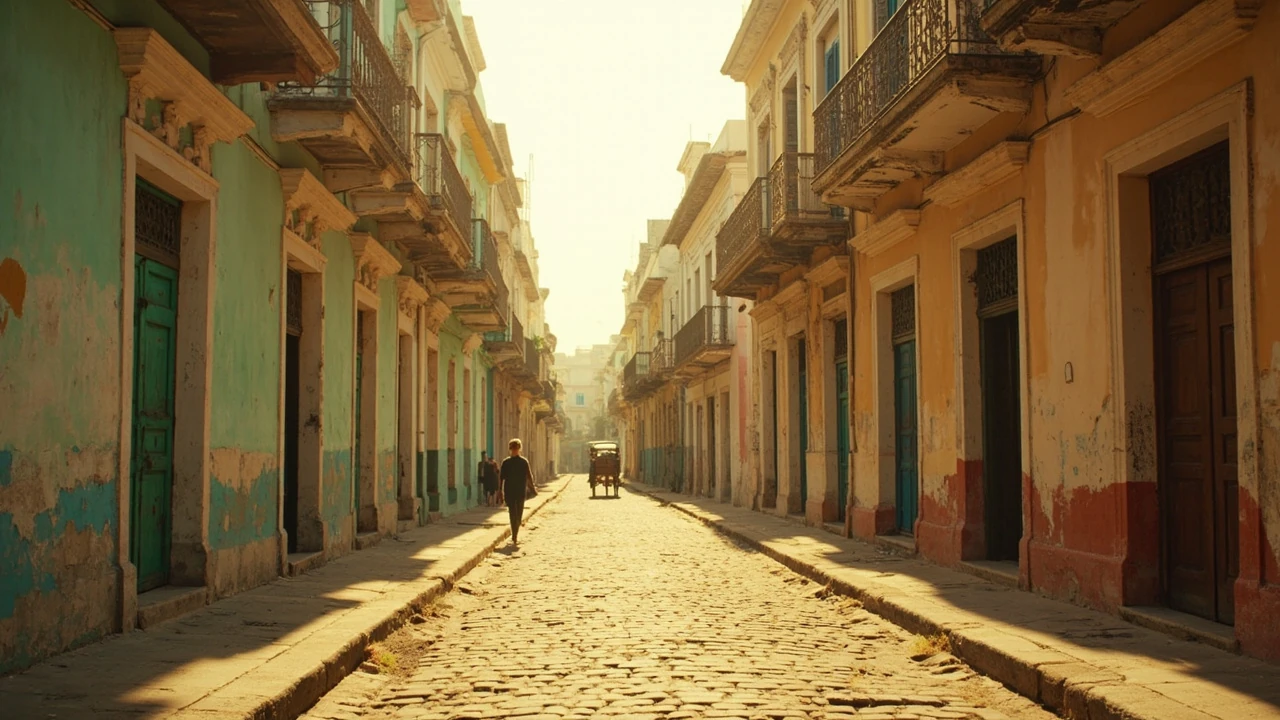
camaguey cuba: what makes this historic city worth a slower visit
A visitor can spend a full day walking through camaguey cuba and still find a new lane, an open doorway, or a small plaza that did not appear on the map. The city rewards attention to detail. Its historic center is not a single monumental plaza; it is a web of winding streets, irregular blocks, small squares, churches, and low-rise buildings with deep wooden shutters. That varied streetscape is the main reason to visit rather than treating the city only as a stop between larger Cuban destinations.
Camagüey also rewards travelers who understand that a good visit depends on realistic timing. The old town rewards walking, but distances within the wider city, transport connections, opening conditions, and access to services can require more planning than the relaxed streets may initially suggest. A short trip is most enjoyable when you divide the city into a walkable historic core, a practical base, and a small number of dependable day plans.
This guide focuses on exactly that: how to understand camaguey cuba as a destination, where to base yourself, what to look for while walking, how to approach food and local services, and how to build a two-day visit without treating uncertain details as guaranteed. Current entry rules, transportation schedules, business hours, and service availability should always be checked with official Cuban authorities and providers close to the date of travel.
Why Camagüey’s old center looks unlike a standard Spanish colonial grid
The irregular layout is not an accident of navigation or poor planning. Camagüey was settled at its present location in 1528 and developed as the urban center of an inland territory associated with cattle breeding and sugar. Its founders adapted medieval European urban ideas to a relatively flat landscape, creating a pattern of major and minor squares, curved streets, alleys, and uneven blocks. A For additional context, historical overview of the city provides useful background on its location and development, while the distinctive plan is best understood on foot.
This history explains why maps often look less tidy than expectations for a colonial city. A straight sightline may end at a corner. A broad avenue may narrow into a shaded lane. Two squares that appear close on a screen can feel farther apart when pedestrians, uneven paving, and entrances interrupt the route. The city’s sense of discovery comes from this pattern rather than from one dominant viewpoint.
The built environment also reflects several periods rather than a single frozen colonial moment. UNESCO describes a historic fabric that includes domestic and religious buildings, earthen materials, clay vessels used for water storage, truncated pilasters, and later architectural influences such as neoclassical, eclectic, Art Deco, Neo-colonial, Art Nouveau, and rationalist design. You do not need architectural expertise to enjoy the result. You simply need to slow down enough to notice how materials, façades, rooflines, and public spaces change from one block to the next.
The historic center covers roughly 54 hectares and continues to function as the city’s social and cultural core rather than functioning only as a preserved museum district. That distinction matters. Daily life, local movement, tourism, and the conservation of older buildings all occupy the same streets. Visitors should treat the neighborhood with the same care they would give any active urban center.
What to look for in the historic center
Camagüey is best explored on foot, with a slow route that links several squares and residential lanes rather than a checklist of isolated landmarks. The most rewarding details are often found between the obvious attractions.
- Small squares: Watch for the secondary plazas and plazuelas that form part of the city’s unusual urban system. These spaces often provide a better sense of daily neighborhood life than the busiest central squares.
- Wooden details: Deep shutters, carved doorframes, projecting balconies, transoms, and closely spaced entrances reveal how the city adapted climate and local building traditions.
- Earthen surfaces: Many historic buildings contain earthen materials rather than relying only on masonry. Their colors and textures help explain why the old center can appear more visually varied than a typical stone-built district.
- Water-storage vessels: Clay vessels associated with domestic water storage are among the details identified in the historic city’s architectural identity. Notice their placement and relationship to entrances when visiting open buildings.
- Religious landmarks: Churches associated with the principal squares form an important part of the historic urban fabric. Check access and service times locally rather than assuming every interior is available to visitors.
- Layered façades: A building may combine an older base with later decorative elements. Look at door proportions, cornices, balcony designs, and restored surfaces rather than searching for one supposedly “pure” colonial style.
- Everyday courtyards: Where a building is open, pause to understand how the entrance, courtyard, and rooms relate to the street. This is often more informative than viewing the property only from outside.
Approach religious and residential properties respectfully. Some structures remain in active use, and some areas may have limited access during services or community events. Photography rules can vary by location. If a doorway is closed, a sign requests no photography, or a resident is clearly present, move on rather than treating the building as a photo backdrop.
The best walking strategy is to orient yourself by squares rather than by distance alone. Pick a central plaza as a reference point, then work outward in a loose loop. This prevents a short visit from becoming a series of disconnected stops and makes it easier to retrace your route if rain, heat, or a sudden downpour arrives.
Where to stay and which neighborhood suits your trip
Accommodation options in camaguey cuba may be limited compared with Havana or Varadero, so choosing a neighborhood before booking matters. Availability and service standards can change, and travelers should confirm current conditions directly with the property. The useful question is not simply which hotel has the lowest price. It is which area places your daily plans, walking route, and transportation needs in the most practical order.
| Area | Best for | Advantages | Limitations to consider |
|---|---|---|---|
| Historic center | First-time visitors and short stays | Many sights are within walking distance, and evening street life is easy to reach | Older buildings may have noise, stairs, or limited room configurations; visitors should read current property details carefully |
| Edge of the historic center | Travelers wanting a quieter base near daily services | A short walk can still provide direct access to the old center while separating overnight rest from its busiest streets | Local transportation may be more important, especially outside daylight hours |
| Elsewhere in Camagüey | Longer stays or visitors prioritizing specific services | May offer a broader range of lodging options or easier access to transport and commercial areas | Requires more travel to reach the main heritage sights and should not be chosen without checking transport arrangements |
For most short stays, the historic center or its immediate edge is the most time-efficient choice. Staying inside the oldest streets can make an evening walk part of the trip rather than an additional journey. However, a property marketed as “in the old town” may still be several blocks from the central squares, so ask for directions from the exact entrance to a nearby landmark.
Consider the practical features below before confirming a room:
- Whether air conditioning or fans are adequate for the season and room orientation
- Hot-water availability and whether water is stored in a tank rather than supplied directly
- Private or shared bathroom arrangements
- Stairs, thresholds, and accessibility of the entrance
- Street noise from bars, music, deliveries, or neighborhood traffic
- Whether the property can arrange legitimate airport or intercity transportation
- Wi-Fi or mobile-data availability, which should not be assumed to work consistently
- Breakfast inclusion and the actual check-in time
Ask for current photographs of the room and entrance, not only a shared property gallery. In a historic area, “upstairs” or “around the corner” can carry very different meanings from those used in a modern hotel district.
Getting to Camagüey and moving around the city
For additional context, Camagüey is an inland city in central Cuba, and visitors generally arrive by air or overland from another part of the island. The Antonio José de Sucre airport serves the city. Flight schedules, airport procedures, and onward connections can change, so confirm the operating carrier and current timetable through the airline or an official travel provider rather than relying on an old itinerary.
Overland travel may be appropriate for travelers already in Cuba, but it usually takes longer than the straight-line distance suggests. Buses and shared vehicles can have varying comfort levels, and schedules may depend on demand. Ask about the departure point, expected duration, transfer frequency, and what happens if a connection is delayed.
| Travel need | Useful approach | Questions to confirm |
|---|---|---|
| Airport to lodging | Prearrange a legitimate transfer or use a service recommended by the booked accommodation | Pickup location, flight monitoring, fare, waiting time, and whether the vehicle is shared |
| Historic-center sightseeing | Walk whenever practical | Whether the route includes uneven paving, steep entrances, or long crossings |
| Places beyond the center | Use a licensed taxi, bicycle taxi where available, or locally recommended transport | Total fare, waiting charges, and whether the driver will wait for you |
| Longer intercity journey | Book a scheduled service rather than relying on an informal departure | Origin terminal, arrival terminal, departure time, duration, and ticketing rules |
Getting around locally can involve more negotiation than in a heavily tourist-oriented city. Agree on the fare before leaving, especially for a taxi or bicycle taxi, and clarify whether the price covers waiting time. Carry small local currency for short rides and confirm what payment forms the driver accepts. Avoid presenting a quoted U.S. dollar figure as if it were the final local price without checking how the conversion and any commission are handled.
Allow extra time on the first day. Airport transfers, check-in, navigation through winding lanes, and communication with a host can consume more time than expected. A traveler who needs a same-day connection should allow a generous buffer between arrival and departure rather than treating the city as a reliable walk-through between flights.
Food, cafés, and a realistic approach to daily services
Camagüey’s food scene gives visitors a way to experience the city beyond its monuments. Restaurants may change hours, close temporarily, or require reservations for popular meals. The most reliable approach is to ask locally and treat recommendations as current rather than permanent.
Look for places with regular local turnover, clear menus, and food prepared close to service. Cuban cuisine often includes rice, beans, meat, poultry, vegetables, and variations of pork; availability depends on the day and the city’s supply conditions. Menus and prices can change, so ask for the current price before ordering. Do not build an itinerary around a specific dish being guaranteed.
Breakfast options may be included at the accommodation, while independent cafes and restaurants can offer lighter meals. For lunch, choosing a place near where you will spend the afternoon reduces the chance of paying for an unnecessary taxi. If a restaurant requires a reservation, confirm the time in person or through the property rather than relying on an outdated travel post.
Carry a small amount of cash for short transactions, but avoid displaying it unnecessarily. Know the current rules for exchanging and using foreign currency, and follow official guidance rather than informal online claims. The United States Treasury’s Cuba sanctions guidance is the appropriate authoritative context for understanding the historic significance of the city’s 54-hectare center, while official Cuban and United States government sources should be used for legal, banking, and payment questions.
Water, internet access, medical care, and vehicle availability are practical constraints rather than defining features of the destination. Carry any essential medication, download offline maps, and keep digital copies of travel documents. A small power bank can be useful, but do not assume that every café, residence, or vehicle will have a suitable outlet.
A responsible two-day plan for camaguey cuba
A two-day visit is enough to understand the old center if you resist the urge to collect every attraction. The plan below assumes one full day and a second day in the historic core, with the second day flexible enough to adapt to heat, rain, opening conditions, or transport delays.
- Begin day one at a central square: Arrive after checking in, identify the major reference points, and take a short orientation walk without trying to cross the entire center. Note where your accommodation, a reliable meal, and a pharmacy or service point are located.
- Follow a loop through major and minor squares: Walk toward a smaller plaza, observe the relationship between the square, church, lanes, and homes, then return by a different street. This creates a sense of the layout without memorizing every road.
- Study one building in detail: Choose a religious or domestic structure that is open. Pay attention to the entrance, materials, courtyard sequence, water vessels, and later architectural additions instead of rushing through several rooms.
- Eat where locals eat: Ask your host, guide, or a restaurant employee for a current recommendation. Choose the option based on the day’s opening status and your route, not on an old listicle.
- Rest during the hottest part of the day: Return to the lodging or spend time around a shaded square. Camagüey is best experienced on foot at a human pace rather than through a heat-intensive checklist.
- Take a longer walk after dinner: See how the center changes when squares and storefronts fill with evening activity. Stay on familiar streets and arrange your return transport before leaving.
- Start day two with a landmark focus: Visit one important church or historic complex with enough time to understand its role in the city.
- Explore an outer historic neighborhood: Walk toward a less visited edge of the old center, paying attention to smaller squares, domestic façades, and local movement. Turn back if the route becomes unfamiliar.
- Reserve the final hours for departure logistics: Confirm the vehicle, allow traffic and traffic-circle delays, and reach the airport or bus terminal with a substantial buffer.
If you have three or more days, keep the third day flexible. It can cover a museum, a longer neighborhood walk, or a change in weather without sacrificing the slower core itinerary. Many travelers gain more from Camagüey by adding a day than by rushing toward the next city.
How camaguey cuba compares with other Cuban destinations
Camagüey is not trying to imitate the scale or energy of Havana, and it offers a different proposition from the beach resorts of Varadero or the coastal scenery of Trinidad. Its appeal lies in an irregular historic landscape, local street life, religious and domestic architecture, and a manageable center that rewards several hours of walking.
Compare the main reasons to choose each type of destination:
| Destination type | Strongest appeal | Travel rhythm | Who may prefer it |
|---|---|---|---|
| Camagüey | Historic squares, winding lanes, architectural details, and an inland city atmosphere | Slow walking with a focused urban route | Travelers interested in architecture, local street life, and a less hurried city |
| Havana | A major metropolitan destination with a much broader collection of neighborhoods, museums, and services | Longer distances and more complex transport planning | Visitors who want extensive city exploration, nightlife, or a wider range of services |
| Trinidad | A compact historic town with strong colonial character and a well-known visual atmosphere | A concentrated visit centered on streets, plazas, and nearby walking routes | Travelers seeking an immediately picturesque historic town |
| Varadero | Beach-centered travel and resort facilities | Scheduled around resort and beach activities | Travelers prioritizing coastal recreation over dense urban exploration |
Camagüey is also a useful counterpoint to the larger destinations covered in guides to Guatemala City and Ecuador’s famous landmarks. Those cities and destinations reward attention to different forms of heritage: monumental civic settings in one case and nationally significant natural or cultural sites in the other. Camagüey’s appeal is more intimate and urban, built around the relationship between small squares, lanes, homes, and churches.
That does not mean Camagüey is an easier destination. Its smaller scale can disguise logistical limitations. Fewer accommodation choices, fewer confirmed transport options, and changing service hours may require earlier decisions than in a larger city. The result is a trip that suits travelers who enjoy research, local conversation, and flexible plans rather than those who expect every service to operate on a fixed schedule.
Frequently asked questions
Is camaguey cuba safe for tourists?
Camagüey is generally visited as part of Cuba’s broader tourism network, and many travelers use licensed taxis and organized services for transport. As in any city, take normal precautions: remain alert at night, protect valuables, use reputable transportation, and follow local guidance. The historic center’s walkable layout should not encourage you to ignore normal urban awareness.
How many days do you need in Camagüey?
Two full days are a practical minimum for seeing the historic center at a comfortable pace. Three days allow more time for individual buildings, outer streets, museums, and weather. One day can work for a tightly planned stop, but it offers limited time to understand the relationship between the city’s squares, residential fabric, and modern daily life.
Is the historic center of Camagüey walkable?
Much of it is walkable, though the winding streets, uneven paving, stairs, and hot weather can make distances feel longer. Comfortable shoes and water are more useful than a vehicle for most sightseeing. Wear shoes with good grip and be prepared for raised thresholds at historic properties.
What is the best time to visit Camagüey?
The most comfortable period for extended walking generally falls outside the hottest part of the day. Morning and late afternoon are good for sightseeing, while midday suits a slower meal, rest, or an indoor stop. Seasonal conditions and current local advice should guide the final schedule, particularly when heat, heavy rain, or tropical weather is a concern.
Do I need a guide to see the old town?
A guide can add useful context about the irregular layout, architectural periods, and relationship between public squares and private homes. It is not essential for every visitor, and some people may prefer to explore independently. If you use a guide, ask whether the service covers the buildings you most want to enter and how long the route will take.
Can you visit religious buildings in the historic center?
Some religious buildings are important landmarks, but interior access can depend on service schedules, conservation requirements, restoration work, and local permission. Never enter during a service without following posted or verbal instructions. Ask locally on the day rather than relying on an outdated list of opening hours.
Should I use a taxi to get around Camagüey?
Walking is often best within the historic core. A legitimate taxi is useful for airport transfers, reaching accommodations outside the center, or visiting a destination that is not practical to reach on foot. Confirm the fare and waiting terms before the trip, and ask your accommodation or a reputable local service to recommend a driver.
Is Camagüey better for culture or beaches?
Camagüey is primarily a cultural and historic city destination. Its appeal lies in architecture, squares, lanes, and street life rather than a beachfront resort setting. If your priority is swimming, organized beach facilities, or a resort-centered itinerary, choose a coastal destination instead.
What should I pack for a Camagüey trip?
Pack breathable clothing, comfortable walking shoes, sun protection, insect repellent, a small power bank, and any medicines you need. Carry a little local cash for small transactions, but confirm current exchange and payment rules. Offline maps and copies of important documents are sensible backups for uncertain connectivity.
What is the key thing to know before visiting camaguey cuba?
Plan for a historic city that is lived in rather than frozen in time. Confirm current transport, accommodation, and entry information in advance, then leave enough time to walk without rushing. Start with a few central squares, add open buildings when access allows, and use local recommendations for meals and services because conditions change.
Leave a Reply