
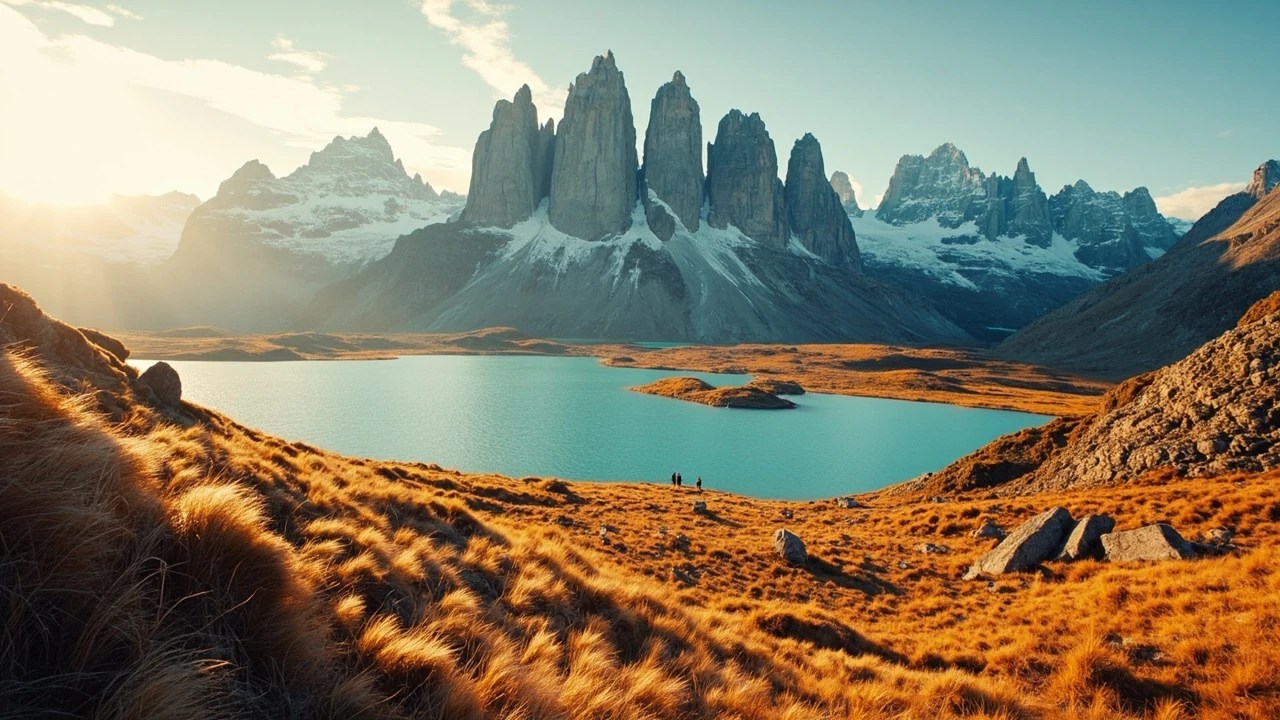
famous landmarks in chile: 12 essential destinations for first-time travelers
A trip to Chile can feel like a collection of separate vacations: one day among the wind-carved towers of Patagonia, another above the desert horizon of Atacama, and another walking through the colorful hills of Valparaíso. Choosing where to begin is the first practical challenge. The country stretches more than 4,000 kilometers from north to south, so the famous landmarks in chile are spread across radically different landscapes rather than clustered in one easy itinerary.
This guide compares the essential stops by landscape, access, travel time, and the kinds of experiences they offer. It covers Santiago, Valparaíso, the Atacama Desert, Torres del Paine, Easter Island, Lake District highlights, Chiloé, and several lesser-known but rewarding landmarks. The goal is not to rank them on a single scale. It is to help you build a route that fits your time, interests, and tolerance for long drives.
For a shorter first trip, combine Santiago with Valparaíso and perhaps a day in the Lake District. With two weeks, add the Atacama Desert or Torres del Paine rather than trying to cover both. Longer journeys can include Easter Island, but it requires more planning because it sits far offshore. Throughout this guide, “famous” refers to places recognized for a distinctive combination of natural scenery, cultural importance, historic character, or visitor experience—not simply the places that attract the largest crowds.
Which famous landmarks in chile should you put on your itinerary?
The best choice depends on what you want to experience. Desert stargazing, monumental granite scenery, Polynesian heritage, historic port streets, and Andean lakes require very different amounts of time. The comparison below highlights the main tradeoffs.
| Landmark | Region | Best for | Time to allow | Main access consideration |
|---|---|---|---|---|
| Torres del Paine | Patagonia | Mountains, lakes, hiking, wildlife | 3–5 days | Long journey from Santiago or Punta Arenas; park lodging should be reserved well ahead |
| Rapa Nui National Park | Easter Island | Moai, archaeological history, coastal scenery | 4–6 days | Flights are limited; island logistics work best with a stay of several nights |
| Valparaíso | Central Chile | Street art, port history, steep neighborhoods | 1–2 days | Most easily reached as an overnight trip from Santiago |
| San Pedro de Atacama | Atacama Desert | Desert landscapes, salt flats, stargazing | 2–3 days | Use daytime for activities and reserve nights for darker skies |
| Lake District | Southern central Chile | Volcanoes, lakes, hot springs, national parks | 3–5 days | Distances are longer than they appear on a map |
| Chiloé | Los Lagos Region | Wooden churches, coastal villages, forest landscapes | 2–4 days | A ferry crossing adds time but avoids a long road detour |
A simple rule helps prevent an overpacked route. Choose one dominant landscape for the trip, then add no more than two contrasting stops. A traveler who wants dramatic scenery might select Torres del Paine as the anchor and add Santiago and the nearby lake country. A culture-focused visitor could spend more time in Santiago, Valparaíso, and Chiloé without attempting the long drive to Patagonia.
Visitors comparing another country’s landmark route may also find Ecuador famous landmarks: 10 spots worth the trip useful for contrasting equatorial scenery with Chile’s combination of desert, Andes, coast, and far southern wilderness.
Santiago and Valparaíso: start with Chile’s historic heart
Santiago sits below the snow-covered Andes, giving visitors an immediate sense of the country’s geography. The city’s best-known historic landmark, La Moneda, is the presidential palace and one of its principal civic buildings. Nearby, Cerro Santa Lucía and Cerro San Cristóbal provide broad city views, while Plaza de Armas and the Mercado Central introduce the dense center where Santiago’s official history meets everyday street life.
The city is also the practical starting point for a short itinerary because it contains the country’s main airport and most of its long-distance transport connections. That does not make the center a sightseeing shortcut. It has distinct neighborhoods worth exploring on foot, including Lastarria, Barrio Italia, the historic core around Plaza de Armas, and the markets near the Mapocho River. The museums and cultural institutions scattered across Santiago also provide a useful introduction to Chilean history.
Valparaíso is an excellent companion to Santiago. Its hills rise steeply from a working port, and painted walls, stairways, street art, old theaters, and dockside warehouses create a more theatrical visual identity than the capital. The historic center and the hills around Cerro Alegre and Cerro Concepcion are the areas most travelers want to see. The former port, the ascensor Concepción, and the narrow streets leading to overlooks provide memorable views of the bay.
Valparaíso also benefits from being explored without a rigid checklist. The painted streets change, residents add new work, and some spaces are better experienced simply by walking uphill and looking back toward the harbor. Wear shoes with good grip, keep valuables secure in crowded areas, and allow more time for transit than the short distance on a map suggests.
| Experience | Best base | Recommended approach | What to avoid |
|---|---|---|---|
| Capital history and museums | Santiago | Pair La Moneda and Plaza de Armas with one neighborhood focused on local street life | Trying to cover every museum in a single day |
| Port city and street art | Valparaíso | Walk the historic center, then explore the hills on foot or by funicular | Expecting every painted surface to be permanent |
| Easy day trip | Santiago | Visit Valparaíso and stay overnight when possible | Rushing there and back without allowing time for the hills |
| Longer cultural route | Santiago plus the coast | Add coastal towns and continue toward the Lake District | Underestimating driving time around the port approaches |
For context on another capital built around a dramatic setting, compare Santiago with Guatemala Capital: what to know about Guatemala City. Both cities reward travelers who look beyond a single monumental center and pay attention to the relationship between urban form, terrain, and daily life.
Atacama landmarks: salt flats, geysers, and desert skies
The Atacama Desert is one of the clearest examples of why famous landmarks in chile cannot be treated as a single sightseeing circuit. Its dry valleys, ochre hills, salt-crusted flats, and extremely clear nights create a landscape that feels unlike Chile’s wetter south. San Pedro de Atacama serves as the main visitor center, while the surrounding reserves and geysers provide the classic desert experiences.
El Tatio is the best-known geyser area east of town. Its activity is strongest in the cool morning hours, which makes an early departure worthwhile. Visitors should follow current park guidance and keep well outside the active vents. The Valle de la Luna offers a more accessible introduction to the desert, with sculpted ridges and color changes that become more apparent in low-angle sunlight.
Other notable stops include the Salar de Atacama, the enormous salt flat that creates a bright horizon, and the Laguna Colorada area farther south. The latter involves high-altitude travel and can feel very different from the towns and vineyards around San Pedro. Flamingos are often associated with the red lagoon, but wildlife viewing should never be reduced to photographing birds at close range.
Stargazing is the desert’s signature night-time attraction. Rather than depending on a single famous observatory, choose a legal viewing location or organized night program and learn which celestial objects will be visible in the current season. Moonlight, cloud cover, and the brightness of nearby towns all affect what can be seen. A telescope helps when conditions are excellent, but the real value of a dark location is the broad view of the Milky Way and the absence of artificial glow.
- For desert beginners: Base yourself in or near San Pedro de Atacama and visit Valle de la Luna, one geyser area, and a salt flat before considering distant routes.
- For photographers: Schedule time around sunrise and sunset, but leave enough flexibility for weather and access restrictions.
- For stargazers: Choose a low-light location, allow your eyes to adjust, bring a warm layer, and avoid driving an unfamiliar dark road without a guide.
- For altitude-sensitive travelers: Discuss medical risks with a qualified professional before traveling to high-elevation sites and take the acclimatization process seriously.
The BBC Travel guide to Chile describes the Carretera Austral as remote and demanding, offering a useful reminder that the south demands more preparation than a quick sightseeing stop. That same principle applies in the Atacama: the desert may look empty, but distances, elevation, water needs, and changing conditions still require planning.
Torres del Paine and Patagonia’s best-known scenery
Torres del Paine is usually the first place travelers name when they list famous landmarks in chile. Three vertical granite towers rise above a turquoise lake, with glaciers, wind-shaped forests, and open steppe extending around them. The towers are famous, but the park is not simply a viewpoint. Its trails, refugios, boat routes, and changing weather create a landscape best experienced over several days.
The classic W Trek visits the towers, French Valley, Grey Glacier area, and the Cuernos sector, although the exact route should be checked against current park maps and conditions. The O Circuit adds a more demanding section along the Paine River and through the French Valley. Travelers with less time can use shorter routes that still reach major viewpoints, but each additional day generally adds landscape rather than repeating the same stop.
Where visitors stay affects the pace. Staying inside or near the park reduces the amount of time spent riding between the trailhead, lodging, and highlights. Accommodation around Puerto Natales is more flexible and often easier to arrange, though it requires a longer daily transfer. Independent hikers, organized trips, and luxury lodges all use the same core landscape in different ways, so compare the walking load and transit time rather than focusing only on the room.
Patagonia’s weather can change quickly. Wind may arrive before rain, and a clear morning does not guarantee a clear afternoon. Waterproof layers, a warm hat, sun protection, and a small first-aid kit are more useful than an oversized umbrella. Trail conditions also vary with the season. Snow, ice, strong wind, or temporary closures can alter routes even when the park itself remains open.
Beyond Torres del Paine, the Carretera Austral is one of Chile’s great road journeys, though it is a route rather than a single monument. For additional context, BBC Travel’s overview of Chile highlights its remoteness and spectacular scenery, while also illustrating why it calls for a deliberate travel plan.
| Patagonia option | Main attraction | Effort level | Best for |
|---|---|---|---|
| Short park visit | Tower viewpoints and selected day hikes | Moderate | Travelers with limited time who want the signature scenery |
| W Trek | Major landscapes across the park | Challenging | Hikers seeking a classic multi-day circuit |
| O Circuit | More remote valley and backcountry sections | Very challenging | Experienced hikers with extra time and suitable conditions |
| Carretera Austral drive | Remote roads, forests, fjords, and settlements | Vehicle-dependent | Road-trip travelers comfortable with long distances and variable conditions |
| Glacier navigation | Waterfront views of glaciers and ice | Generally moderate | Visitors who want a guided perspective on the ice landscape |
Do not schedule Torres del Paine as a hurried side trip from Santiago. The distance makes a rushed visit frustrating and increases the risk of weather-related disruption. Give the region its own block of time, keep transport days separate from major hikes where possible, and confirm current park access before making nonrefundable plans.
Easter Island’s moai: history, restoration, and a remote island itinerary
Easter Island, or Rapa Nui, is the most distant and culturally distinctive stop among the famous landmarks in chile. Its monumental stone figures, known as moai, were created by the Rapa Nui people and stand across the island in landscapes that also include volcanic craters, coastal cliffs, caves, petroglyphs, and the ceremonial site of Rano Raraku. The island deserves far more attention than a quick excursion from the mainland.
Aonahu Tongariki contains the largest group of moai and is often the first place visitors reach. At sunset, the figures are silhouetted against the ocean, although the experience is busy during peak periods and the site has specific rules about touching and climbing. Anakena offers a broad coastal setting, a white coral-sand beach, palm trees, and a group of moai with a different atmosphere from the exposed southern coast.
Rano Raraku is where most moai were quarried, so it provides essential context for the monuments seen elsewhere. Many statues remain in the quarry area in different stages of carving and transport. Tapati Rapa Nui, the island’s major cultural festival, features dance, music, body painting, carving, and traditional competitions, although its dates and program details should be checked for the current travel year.
Island logistics favor staying at least four nights. A rental car makes many inland sites easier to reach, though some roads are unpaved and conditions vary. Guided archaeological tours add context that a map cannot. A single day is better spent on a focused excursion than an attempt to circle the entire island while rushing between stops.
- Archaeology-focused visit: Prioritize Rano Raraku, Aonahu Tongariki, and a guided site tour, then add coastal scenery if time remains.
- Slower cultural visit: Stay several nights, travel by car during the day, and leave room for beaches, walking, and changing coastal conditions.
- Festival-focused visit: Plan around the published Tapati program, but confirm dates and accommodation before booking flights.
- Accessibility needs: Ask the site operator about terrain, transport alternatives, and assistance because some locations involve uneven ground or stairs.
Respect for living Rapa Nui culture is inseparable from responsible travel. Follow local rules, do not climb on moai, stay on marked paths, and avoid treating archaeological sites as photo backdrops. The island’s heritage is active and belongs to its people, not merely to the list of famous landmarks in chile.
Lake District highlights: volcanoes, lakes, and easy access to the wild
South of Santiago, the Lake District brings together Andean volcanoes, clear lakes, temperate forests, hot springs, and national parks. The region is an accessible introduction to southern Chile because roads and rail lines connect the major centers of Puerto Varas, Puerto Varas, Osorno, Pucón, and Temuco. It also works well as a base for excursions into the surrounding countryside.
Osorno Volcano is one of the region’s strongest visual landmarks. The mountain rises above Llanquihue Lake and can be seen clearly from the waterfront and roads around Puerto Varas. The volcano is a backdrop for many activities, including lakeside drives and visits to nearby parks. The best view is not always the closest one: changing weather can hide the summit, while clear periods create reflections that appear almost symmetric across the water.
Vicente Pérez Rosales National Park is another key area, known for the turquoise waters of Lago Todo los Santos, the Petrohué Falls, and the imposing Tronador massif. Access requires road travel and sometimes walking beyond the main viewpoints. Weather, road conditions, and trail closures should be checked with current local information.
Further south, Pucón offers access to Villarrica Volcano and Lake Villarrica. This is a different experience from the quieter Llanquihue area. Here, lake recreation, forest trails, geothermal facilities, and volcano-related tourism shape the visit. Those seeking dramatic viewpoints can also look toward the Trancura Valley, where volcano views unfold through open countryside.
The Lake District can be combined with Santiago and the northern Lake District, but schedules need to account for real travel distances. A relaxed week might include two nights in Santiago, three around Puerto Varas, and a final stay nearer the airport. Avoid treating the region as a quick stop between larger destinations; its value comes from slowing down and using shorter day trips rather than racing across the map.
Chiloé and lesser-known southern landmarks
Chiloé is a large island off the Chilean coast with a landscape of channels, fishing villages, temperate rainforest, tidal flats, and distinctive wooden churches. UNESCO inscribed the Churches of Chiloé as a World Heritage Site because of their unusual architecture and the way European construction met local materials and building traditions. They are culturally important landmarks rather than simply old buildings with attractive exteriors.
A ferry from the mainland provides a memorable arrival, and island roads allow visits to places such as Castro, with its colorful stilt houses and large Palafitos de Chiloé; Ancud, a historic port town; and rural churches in several small settlements. The journey is scenic, but the ferry crossing and road distances should be included in the itinerary rather than treated as instant transfers.
Farther south, the journey through Aysén highlights glaciers, lakes, and fjords. The marble caves near Puerto Río Tranquilo are one of the area’s best-known natural attractions, reached by boat through calm turquoise water. Weather can affect access, and the excursion depends on the local route and sea conditions. The Southern Ice Field and its glaciers are another defining feature of the wider Patagonian landscape, though not every viewpoint provides close access.
These smaller stops are valuable because they reveal a side of Chile beyond the biggest names. They also require a more flexible pace. Weather-dependent transportation and lower visitor volumes mean that plans should leave room for change.
How to choose and sequence a landmark route
A workable route starts with geography. Santiago is the main transport hub, but most of the country’s major natural landmarks lie far from the capital. The Lake District offers a manageable southern extension. Atacama is reached by air or a long road journey, and Torres del Paine requires another major transfer. Easter Island is an international flight destination with its own island-based rhythm.
For a first visit with limited time, prioritize one complete experience over a collection of quick stops. This sample framework shows how the major regions can fit different trip lengths.
| Trip length | Suggested structure | What to leave out | Key planning priority |
|---|---|---|---|
| 5–7 days | Santiago, Valparaíso, and the Lake District | Patagonia and Easter Island | Use a short domestic flight or organized transfer for the long southern leg |
| 8–10 days | Santiago, Atacama, and Valparaíso | Trying to add Patagonia as well | Fly to the desert and allow recovery time from the flight schedule |
| 12–14 days | Santiago, Lake District, and Torres del Paine | Rushing all three into short overnight stops | Separate travel days from major hiking days |
| 16 days or more | Add Easter Island to a Santiago-based trip | Unnecessary regional detours | Book the island as a separate block with arrival and departure days |
- Choose the anchor. Decide whether the trip centers on desert, mountains, island culture, historic cities, or a balanced mix.
- Map actual travel time. Add buffers for weather, road conditions, transfers, and the return from a remote destination.
- Protect the best days. Do not place the most important hike, archaeological visit, or desert excursion on the same day as a long transfer.
- Build one slower stop. Choose a lake, island, or neighborhood where you can spend more than a single night.
- Reserve in sequence. Flights and limited transport should be settled before nonrefundable lodging, particularly for Patagonia and Easter Island.
A common mistake is treating every famous landmark in chile as a day trip. Distance does not divide neatly by tourist zones. Torres del Paine alone can require a full day of travel in each direction, while a short flight to the Atacama can absorb a morning even when the flight itself is short. A concise itinerary is not necessarily a rushed one; it simply removes low-value stops.
Practical planning advice for visiting Chile’s landmarks
Chile rewards advance planning, but not every detail needs to be settled months ahead. The most time-sensitive items are usually flights, park accommodations, Easter Island lodging, and popular guided activities. Weather cannot be booked away, so a good itinerary includes alternatives and does not depend on one perfect viewpoint day.
- Learn the seasons by region. Conditions in Patagonia, the Atacama, Easter Island, and central Chile do not follow one national pattern. Check regional forecasts and park guidance close to travel.
- Pack in layers. The Andes can be cold and windy even when nearby cities feel mild. Sun protection, rain shell, warm fleece, and sturdy footwear cover more conditions than one heavy coat.
- Carry water and protect electronics. Desert heat and remoteness make hydration important, while dust, spray, and changing weather justify waterproof protection.
- Allow for connection time. Domestic flights can be punctual, but remote ground transfers and baggage pickup may still disrupt a tight connection.
- Verify park and site rules. Reservation systems, vehicle limits, restricted areas, guides, and trail closures can change. Follow current official instructions rather than relying on an old blog or map.
- Respect cultural and environmental limits. Stay on paths, avoid touching archaeological features, pack out waste, and follow local guidance around wildlife and fragile desert terrain.
Food and lodging vary by region. Santiago, Valparaíso, and larger towns offer the broadest range of restaurants and accommodation. Remote Patagonia may have limited dining choices and fewer beds. Atacama trips often use a lodge or hotel as a base for excursions, while Easter Island rewards visitors who rent a car and spend time beyond the main settlement. Set expectations according to the destination rather than assuming every Chilean town follows a city-hotel pattern.
English-speaking tours exist at major visitor sites, but independent travel is often more revealing in smaller towns. Learn a few Spanish phrases, carry a translated map, and keep offline directions available in remote areas. The effort is modest, and it can make interactions with guides, drivers, hosts, and shopkeepers more rewarding.
Frequently asked questions
What are the most famous landmarks in chile for a first-time visitor?
Torres del Paine, the moai of Easter Island, Valparaíso’s painted hills, Santiago’s La Moneda, and the Atacama’s salt flats are among the most recognizable. The right first choice depends on whether you prioritize scenery, history, culture, or a manageable combination. Santiago and Valparaíso are easiest to combine, while Patagonia and Easter Island require more travel.
Can you visit Torres del Paine and the Atacama Desert in one trip?
It is possible with a long itinerary, but it is rarely the best use of a short vacation. The desert is in northern Chile and Torres del Paine is thousands of kilometers south, so each requires substantial travel. With two weeks, choose one as the primary landscape and give it several full days. Add the other only if a flexible schedule matters more than extra time elsewhere.
How many days should I spend on Easter Island?
At least four nights is a useful minimum for a first visit. That allows time for major archaeological sites, coastal landscapes, and a slower day without trying to cross the island every day. A week allows a more relaxed pace. Because flights are limited and island accommodation has a smaller inventory, build the island portion around confirmed flights before adding other destinations.
Is Valparaíso worth visiting from Santiago?
Yes. Valparaíso offers a distinctive port-city experience, with steep hills, street art, historic buildings, ascensors, and bay viewpoints. An overnight stay is preferable to a same-day visit because it gives you time to explore beyond the busiest streets. Use the actual travel time for the return journey rather than estimating only from the distance on a map.
What is the best time to see the Atacama Desert?
There is no universally correct month because weather, access, and crowd conditions vary. The desert can be visited throughout the year, and winter offers unusually clear air in many locations, while summer provides longer days and warmer conditions. Check current conditions for geysers, roads, and high-altitude excursions, and prioritize clear nights if stargazing is a central goal.
Do I need a guide in Torres del Paine?
Guides are not required for every main trail, and experienced independent hikers can plan marked routes. However, a guide can be valuable when conditions are difficult, routes are unfamiliar, or you want stronger local interpretation. The W Trek is not technically guided, although many travelers book an organized trip for logistics. Weather, trail status, and personal experience should determine whether a guide adds value.
Which Chilean landmarks are best for families?
Valparaíso can work well for a shorter urban outing, while the Lake District offers lakes, forest scenery, wildlife, and easier day outings. In the Atacama, some excursions involve long vehicle rides and high elevation, so activity length matters more than the destination’s general appeal. Torres del Paine and Easter Island can also suit families when the itinerary includes enough flexibility and the pace is not overly aggressive.
Are the moai at Easter Island the same as the famous landmarks in chile found on the mainland?
They are related by national geography but not interchangeable. The moai belong specifically to Rapa Nui and its archaeological landscape, while mainland highlights include Torres del Paine, the Atacama, Chilean Patagonia, Valparaíso, and the Lake District. If time is limited, choose the island for deeper cultural immersion or the mainland for a broader sampling of Chile’s natural environments.
How should I pack for a multi-region Chile itinerary?
Pack layers rather than one climate-specific outfit. A lightweight waterproof shell, warm mid-layer, comfortable walking shoes, sun protection, and a compact daypack will cover many conditions. Add a warmer sleeping layer or specialized gear if you are camping, hiking above the tree line, or traveling during a colder season. Keep critical medication and a small first-aid supply accessible.
What is one common mistake when planning a Chile landmark trip?
The most damaging mistake is underestimating transfer time. Chile is a long, narrow country with mountains, roads, and limited transport between regions. A two-hour flight may require early check-in, ground travel, and a long connection afterward. Reserve the first evening lightly, avoid booking a major activity immediately after arrival, and keep one flexible day when weather is part of the destination.
Leave a Reply